

The European Research Council's Proof of Concept is awarded to researchers to investigate the commercial potential of their research. All of them have previously received ERC Starting Grants, and this is the third time Paul Bourgine has been awarded an ERC grant. The funding is part of the EU's Horizon Europe research and innovation programme.
Paul Bourgine, principal investigator at Lund Stem Cell Center, has been awarded a prestigious ERC Proof of Concept grant for his innovative research project CiThOss – Cellular immunoTHERapy modelling by exploitation of humanized OSSicles. The project aims to bridge the gap between research and innovation in cancer therapy development by improving the way immunotherapies are tested before reaching patients.
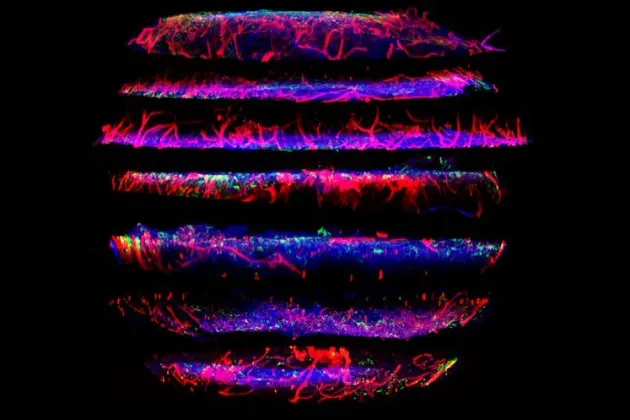
“CiThOss is a project at the frontier between research and innovation. From a research standpoint, we aim to demonstrate that humanized ossicles (hOss) can serve as a superior platform for modelling immunotherapies,” explains Bourgine. These so-called hOss are mini-bone tissues designed to replicate a patient's bone and bone marrow environment—including the cancer itself. “By recreating the patient tissue and disease environment, we offer a personalized approach for testing immunotherapies, an emerging class of treatment that harnesses the immune system. We postulate that resulting data will be more predictive of treatment efficacy.”
What makes CiThOss unique is not only its scientific ambition but also its application of proprietary technology developed at Bourgine’s lab.
“This is where the innovation aspect comes into play; the creation of patient mini-bones is enabled by the OssiGel technology, proprietary of Dhalion Biotech AB, a spin-off from my laboratory. Demonstrating the value of patient mini-bones/OssiGel in the context of immunotherapies will boost the development of our start-up, a second objective of this ERC PoC.”
The inspiration for the project came from the persistent discrepancy between results in animal testing and those in clinical trials.
“In pre-clinical models, many treatments are highly effective in treating cancers but often fail in human trials. What are the cellular and molecular differences between mouse and human, explaining that gap? It seems that our bone marrow is quite unique, exercising multiple roles: protecting cancer cells but also dampening the immune responses. I thus naturally wonder whether our bone marrow environment could also affect cellular immunotherapies, possibly contributing to their current limitations.”
The project responds to a widely acknowledged problem in cancer research: the low predictive value of current preclinical testing models. Bourgine emphasizes that this is not a marginal issue.
“We are here talking about 90% failure rate overall, creating a huge financial and translational challenge!”
Immunotherapies, including CAR-T cells and checkpoint inhibitors, have shown promise, but their effectiveness can vary significantly between different types of cancer and individual patients.
“CiThOss thus aims at demonstrating the predictive power of personalized tools for cellular immunotherapies. In this PoC project, we will focus on generating hOss from leukemia patients and evaluate a CAR-T cell product efficacy in our model versus the gold standard. Compiled results will hopefully validate the superiority of hOss and strengthen its adoption for the safety and efficacy evaluation of immunotherapies.”
Receiving the ERC Proof of Concept grant is a major milestone for Bourgine and his team.
“Very few grant schemes combine research and innovation objectives, this is the specificity of ERC PoC. ERC grants are prestigious, delivering a stamp of quality that foster visibility and credibility. It increases the likelihood of translating our findings. My lab and Dhalion Biotech AB aim to fully capitalize on this opportunity.”
Looking ahead, Bourgine is enthusiastic about the potential of CiThOss.
“This is a truly exciting step for us; we propose combining personalized tissue engineering and cancer immunotherapies. It's a completely new direction, with great translational opportunity but also new fundamental discoveries to be made. Can't wait to see the outcomes!”