

The programme, VISI-ON-BRAIN (Cutting-edge Human In Vitro and In Silico Biomedical Tools on Brain Disorders), is funded by Horizon Europe under the Marie Skłodowska-Curie Actions – Doctoral Networks. Over four years (2026–2029), a consortium of universities, hospitals and industry partners across eight European countries will train 15 doctoral researchers. Together, they will develop and apply next-generation in vitro (cell-based) and in silico (computer-based) models of complex brain disorders, including Alzheimer’s, Parkinson’s, and Huntington’s disease.
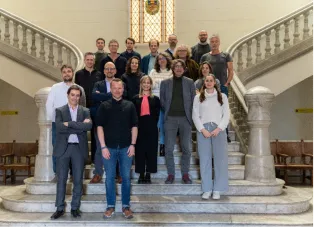
The network is coordinated by the University of Barcelona in Spain through Creatio – Production and Validation Center of Advanced Therapies. It brings together academic and non-academic actors to bridge basic research, clinical insight and industrial innovation.
A pressing need for better disease models
Neurodegenerative diseases remain among the most difficult to treat. Despite decades of research, most experimental therapies fail in clinical trials. One key reason is that commonly used animal models do not fully reflect the complexity of human biology or disease progression in patients.
"New and better models are needed to improve efficiency in developing new drugs for neurodegenerative diseases and meet the demands of new therapeutics such as biological medicines," explains Henrik Ahlenius, associate professor at Lund University’s Faculty of Medicine and one of the two Lund-based principal investigators in VISI-ON-BRAIN.
At the same time, research policy in Europe and the United States is shifting toward methods that reduce or replace animal testing and generate more human-relevant evidence. Regulatory agencies, including the U.S. Food and Drug Administration (FDA), are encouraging the development of so-called New Approach Methodologies (NAMs), such as advanced human cell systems and computational modelling – approaches which aim to generate data that is more relevant to human biology.
VISI-ON-BRAIN is designed to close this translational gap. By building an integrated pipeline of predictive, reproducible, clinically anchored experimental and computational tools, the programme will train researchers who can work at the interface of biology, data science, engineering and regulatory relevance.
A pan-European, intersectoral training and research platform
The programme brings together 15 academic, clinical, and industrial partners across eight European countries, enabling doctoral researchers to combine wet-lab innovation with advanced modeling, analytics, and translational validation.
In Lund, researchers will contribute to the network with expertise in human stem cell biology and advanced in vitro modelling of the nervous system. “For example, my research team will develop novel models of Alzheimer's disease and study glial cell interactions in initiation and progression of the disease," notes Henrik Ahlenius.
Anna Falk, professor of developmental biology specialising in neuroscience at Lund University and director of Lund University’s ATMP Centre, is the second Lund-based investigator in the network. Her research focuses on stem cell-based models of the human brain using induced pluripotent stem cells, providing new opportunities to study disease mechanisms directly in human cells.
The programme also represents a workforce and competitiveness investment. It will train doctoral researchers who can move easily between academia, clinical research, and industry, helping scale NAMs from promising methods to validated, deployable approaches aligned with evolving regulatory expectations.
Moving from “more data” to “better evidence”
Brain disorders are a major global health challenge and a heavy burden on patients, families, and healthcare systems.
VISI-ON-BRAIN aims to move from generating more data to better evidence by generating human-relevant tools that enable earlier, more reliable decisions and improve the efficiency of drug discovery and development.
For the researchers in Lund, participation in the network strengthens ongoing efforts to advance stem-cell based disease modelling and to train researchers equipped for a rapidly evolving biomedical landscape.